Wednesday, June 3, 2020

Enemies Foreign And Domestic - TWW S3E20


Original airdate: May 1, 2002

Written by: Paul Redford (9) and Aaron Sorkin (62)

Directed by: Alex Graves (9)

Synopsis
  • CJ's public comments about a tragedy in Saudi Arabia bring death threats, and the President demands she agree to Secret Service protection. Sam's negotiations with Russian representatives over an upcoming presidential summit may be derailed when a Russian-built nuclear reactor is discovered in Iran. Leo urges the President to help out a computer maker facing a huge business problem. Toby spars with a Russian reporter, and a baffling letter to the President has Charlie confused.


"By the way, I can't guarantee anything except to say that if you're dead, chances are I am, too."


CJ is pissed.


We've seen her pissed about the plight of women in the Mideast before, in The Women Of Qumar. In that episode, after powerfully pressing her point about the morality of the United States making military deals with a country that mistreats its women, she pulled herself together and didn't let any of that show in her briefing to the press. Not so here.
CJ: "Outraged? I'm barely surprised. This is a country where women aren't allowed to drive a car. They're not allowed to be in the company of any man other than a close relative, they're required to adhere to a dress code that would make a Maryknoll nun look like Malibu Barbie. They beheaded 121 people last year for robbery, rape, and drug trafficking, but they've no free press, no elected government, no political parties, and the royal family allows the religious police to travel in groups of six, carrying nightsticks, and they freely and publicly beat women. But 'Brutus is an honorable man.' Seventeen schoolgirls were forced to burn alive because they weren't wearing the proper clothing. Am I outraged? No, Steve. No, Chris. No, Mark. That is Saudi Arabia, our partners in peace."
(Also note that instead of using an already-created fictional Middle East nation to take the brunt of CJ's anger over how they treat women, Aaron Sorkin puts Saudi Arabia on blast. Part of that is because this story of girls killed in a school fire because they were prevented from leaving actually happened. Don't feel bad for Qumar, though - that country is going to play a really important role really soon.)

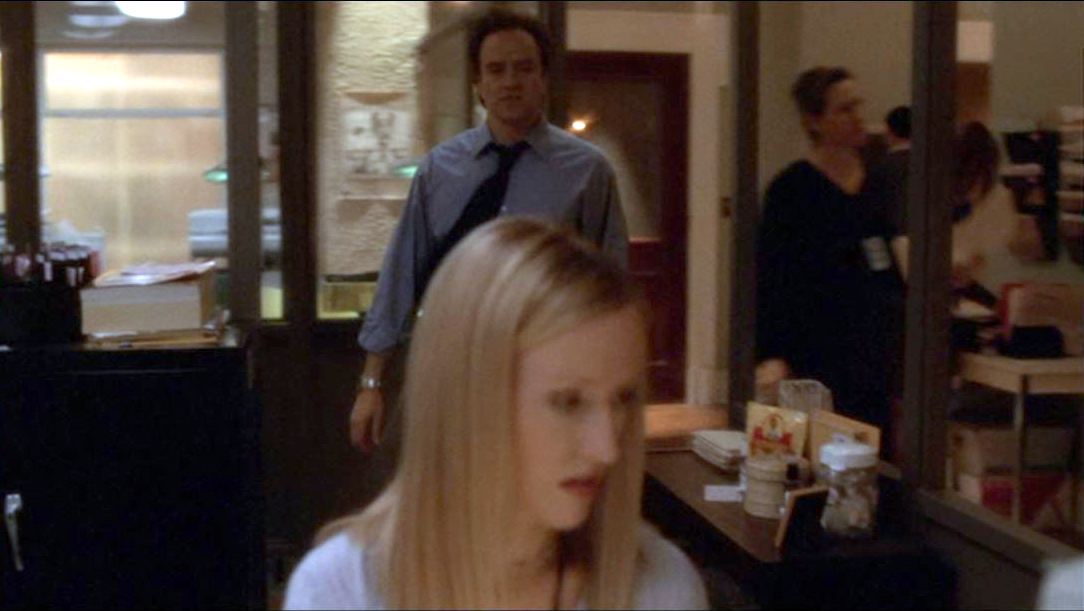
Speaking out against an American ally gets CJ in some hot water, as the complaints immediately start flying into her email. But there's also a death threat in those emails, and while CJ tries to shrug it off as no big deal, her colleagues are not going to treat it so casually. I love the look Donna gives CJ when CJ tries to stop her from bringing Josh in to read it:


Josh, you'll remember, nearly died after being shot by people who made death threats against White House staff, so he's particularly inclined to take this extremely seriously. The Secret Service gets involved, Ron Butterfield (yay!) takes a look at the email, and things start getting way more dangerous. It turns out this is no random threat from someone halfway around the world mad at having his country criticized; this is someone actively stalking CJ right here, in Washington. As Ron shows her the pictures included with the latest threats, the gravity of the situation sinks in:
CJ: "Where did you get these?"
Ron: "Today's email."
CJ: "That's me leaving my house on Monday. This one's at a restaurant where I had dinner with my niece. This one's from this morning ... it was taken from about twenty feet away."
 

CJ agrees to Secret Service protection, and Special Agent Simon Donovan is assigned to lead her detail. Now, why am I discussing this plotline first, in an episode that features a planned summit between the leaders of the US and Russia almost being canceled because of rogue hardliners building a a nuclear reactor in Iran?

Because Simon Donovan is played by Mark Harmon, and an actor of that stature means this guy is going to be pretty important. We don't see it yet in this episode - Donovan only shows up in the final two minutes - but the story arc of CJ's stalker and the agent protecting her takes us through the end of the season.

About that summit - Chigorin, a purported political reformer, has recently been elected as Russia's president, and plans are in place for President Bartlet to meet with him in Helsinki, Finland, at the end of the week. I say "purported" because the man has a history:
Toby: "The Russians finally elect a reformer, and you still -"
Sam: "Twenty years in the KGB, an election that will make Tammany Hall look like the League of Women Voters. I'm not sure that qualifies as a ..."
(Looking back, it's somewhat ironic that this "reformer" Russian president is somewhat loosely based on Vladimir Putin, who was elected to the office for the first time in 2000 [his first stint in office ended in 2008, then he was re-elected in 2012]. Putin did indeed spend 16 years in the KGB before moving into politics. There was some hope for him being a political reformer following the failed presidency of Boris Yeltsin, but as recent events have proved, Putin is far from a trusted protector of democracy.) 

Unfortunately, news soon arrives in the Oval Office of a nuclear reactor being built by the Russians in Iran. The Russians say it's a light-water reactor designed to generate electricity, but:
President: "What's the problem?"
Fitzwallis: "Four intelligence agencies are telling me I'm wrong, and I am. The Russians are building them a heavy water reactor."
President: "What do you use heavy water for?"
Leo: "Plutonium."
So the Russians are helping Iran enrich plutonium and possibly develop a nuclear weapon. This is something the United States cannot allow, and certainly can't be seen to condone by meeting with the Russian president should word of this reactor leak to the public. Some advisers have a thought, though - perhaps this reactor is being pushed through by hardliners, ex-Soviet Cold War military and government types who aren't on the side of the newly elected president, and who are taking advantage of the early steps of a new administration just getting on its feet to spread influence into the Middle East. There's no way to be sure, though, so Leo and Josh start thinking of excuses to get Bartlet out of the summit:
Josh: "There's something ... really good on television."
Leo: "What?"
Josh: "That's why he can't go, there's something really good on television and the President doesn't know how to work a VCR."
However - all is not lost. Sam is negotiating with a couple of fellows from the Russian Embassy over some last-minute details on the summit - scheduling, menu items, little things like that. In the course of their discussions, Sam encounters some communication-related problems - phrases like "it's coming down to it" and "it's funny you should mention that" are puzzling the Russians, as they don't have a grasp of English idioms.

And then, as they're wrapping up, Nikolai Ivanovich has a request of his own. He wants to add language to the joint statement released at the close of the summit, a statement with wording already worked out at the highest levels of diplomacy. Why would an Embassy staff member want to get this wording - wording he tells Sam he wrote himself - cleared through the White House Deputy Communications Director? And about that statement:
Sam: "What he wanted added was, 'Together in partnership, we must stem the tide of nuclear proliferation, for why should our two nations still possess the power to destroy themselves ten times over; surely once is enough.' Now, I have to tell you, sir, that both these negotiators had conversational English, but they didn't have idioms. I promise you -"
President: "'Stem the tide' is an English idiom."
Sam: "Yeah, and they don't have 'surely, once is enough,' either."
Josh: "Sir, Chigorin wrote that."
Sam: "I think he's trying to send you a message, Mr. President."
President: "He is trying to send me a message!" 
Chigorin uses idiomatic phrases familiar in English, but obviously not familiar to the two guys from the Embassy, to get a sort of coded message to the White House that he is in favor of preventing the spread of nuclear weapons, that he is not on board with the reactor in Iran being built by holdovers from a previous regime. And the summit is saved.

You gotta give Sorkin the writer credit by making words the hero - he's able to use language, written language, and the structure and form and color of English phrases as a key plot point in the episode. International tensions and a possible Iranian nuclear weapon are avoided thanks to idioms! It's like the wildest possible geopolitical fantasy a writer and student of language could ever have.

Toby has absolutely nothing to do (except shoot the breeze with a White House security officer) - until CJ gives him a job. He's asked to deal with a Russian journalist from a newspaper critical of the Russian government, so critical, in fact, that the government refuses to issue her press credentials to cover the summit. Toby has to figure out if the Americans should credential her instead. Of course freedom of the press comes to the forefront, and the credentials are issued, but not before Toby gives the reporter a lecture about the responsibilities the press also holds to maintain that freedom:
Toby: "You reported the failing grades of the Defense Minister's twelve-year-old son! Does that even count as journalism? Does that do anything but bring ridicule on a defenseless kid? We've got people like you here, on cable and on the internet, and there's no one anywhere on the ideological spectrum that doesn't roll their eyes when their names are spoken out loud."
(Another personal note, from the viewpoint of 18 years in the future - if only people "anywhere on the ideological spectrum" would still roll their eyes at commentators like this "on cable and on the internet," instead of having people in positions of power who should know better amplify and spread conspiracy theories and wild attacks against serious journalism. It'd be a far, far better country we'd be living in.)

In addition to the summit and the Iranian reactor problem, President Bartlet has another problem. Antares, a huge American computer chip manufacturer, has found a problem with their product and they're going to announce a recall of all their computer chips. Leo tells the President that's some 80,000 chips, a move that will prove devastating (if not fatal) to their company. Leo presses Bartlet to provide some government help, some loan guarantees, something to help them through this calamity - but the President has an issue with that. Jake Kimball, head of Antares, was one of the largest contributors to Bartlet's presidential campaign. The President knows he can't provide any government support for Kimball - it'll look like a favor being granted in return for his financial support, a "quid pro quo," if you will. Bartlet turns down the plan Leo draws up, but he does commit to the federal government keeping their contracts with the company. Even if their sales take a massive hit in the market, the US government will keep buying Antares products.

Charlie's story is quite engaging. He's got a letter, but it's not just any letter - it has the President's secret mail code, a code number that's only used by those with some kind of relationship to Bartlet. But this letter is from a kid who says he met the President's assistant Mr. Farley, meeting at a Presidential speech on the budget in Pittsburgh. This is baffling, though - President Bartlet never gave a budget speech in Pittsburgh, and no one can recall an assistant named Farley. 

Charlie just can't let this go. Something about this letter has him determined to solve the puzzle, but every direction he can think of turns up empty. Until, in a frankly incredible coincidence that Sorkin should probably be ashamed of concocting, he overhears a casual remark between Toby and the President:
Toby: "The Journal probably wrote an editorial about his broken promises, too."
President: "Hey, I should be able to reference that speech. When did he give that? It was in the industrial Northeast."
Toby: "Pittsburgh, Pennsylvania."
President: "Charlie, FDR gave a budget speech in 1932 in Pittsburgh, can you get your hands on a copy?"
Charlie puts two and two together - Bartlet used the same mail code as Franklin Roosevelt (one of his heroes, it turns out), it was Roosevelt who delivered that speech in Pittsburgh, and somehow a letter written in 1932 was delivered to the White House 70 years later.

Charlie actually tracks down the "kid" who wrote the letter, Alan Tatum, now 70 years older, and brings him and his son to the White House to finally meet the President. Of course the Tatums are thrilled and excited to be in the Oval Office, but it's sweet to see Tatum's reaction when he realizes it was Charlie, a young African-American working right next to the President of the United States, who made the extra effort to respond to a letter sent decades ago. Not only is he honored to get photographed with the President, but he makes a special effort to get a picture with Charlie, too:


A lot going on this episode, as we're thrown back into the neverending stream of events and crises, big and small, that an administration deals with every day. On the one hand, Sorkin the writer gets to use the English language as a code system for special undercover diplomatic communication; on the other hand he uses a coincidental off-topic remark at just the exact right time to solve a problem for Charlie, in a conceit that's barely believable in science fiction. Ha! But the key for us, the viewers, is to get on board the CJ death-threat storyline and get ready to ride that to what we expect to be a cliffhanger ending to Season 3.


Tales Of Interest!

- The opening of the episode - the part that usually gives us scenes "previously on The West Wing" - simply shows snippets of earlier episodes where characters announced their job titles. We also saw this with the Season 1 episode Celestial Navigation; I think it's partly because there's not really a tie-in with previous stories here (we're ramping up for the final arc to finish the season) and partly because it followed the Documentary Special, perhaps as a way to greet new viewers to the show.

- Gail's fishbowl has the symbol for "female," the one that looks like a mirror (as opposed to the shield/spear symbol depicting "male").


 That ties in with CJ's anger over how women are treated in Saudi Arabia.


Here's a close-up:


- The story of the schoolgirls who died after being prevented from fleeing a fire by Saudi religious police is based on a real tragedy. Sorkin made a few changes around the edges - in reality, 15 girls died, while in the script it was 17; the actual fire was at a school in Mecca, while in the show it occurred in Medina. But the point is the same: the mutawa would not let the girls leave the burning building, because in their view they could not be seen by rescue workers in their "inappropriate" garb, and therefore the girls died in the fire. Some articles about this episode said more Americans probably learned of this event from The West Wing than read about it in news media reports at the time.

- Another point about that plotline - the fire in Mecca happened March 11, just 50 days before this episode aired. That means Sorkin was still working on the script six weeks before broadcast, a really short time for a major network TV show (although if you remember Isaac And Ishmael, that entire episode went from idea to script to filming to editing to broadcast in only 22 days ... but I'll grant that one is a special case). The time-crunch problems with the series' production caused by Sorkin's individual deep involvement with every episode is well-known, and the pressures of keeping up with the network's schedule and contracted number of episodes (along with the studio's reluctance to keep paying the ballooning shooting expenses caused by later and later delivery of scripts) led to him leaving the show after Season 4.

- Multiple times over the past two-plus seasons we've seen CJ working on a Gateway brand laptop at her desk. Now, for the first time (I think), she's using a Mac laptop.


- As you know, I keep an eye on how President Bartlet has his desk arranged, as he (or, more likely, the set decorator) likes to change things up. Instead of the grouping of several family photographs that are usually seen there, now he's just got one photo of Abbey, along with a clock and his glass paperweights. The other photos have been moved to a table behind his chair, which I don't remember noticing previously:


- Alex Graves brings us some cool shot compositions. I really liked the swivel and pulling back of the camera to the overhead shot of the Presidential seal on the Oval Office carpet, right after Bartlet gets the word about the Iranian reactor:


Another neat shot is the low angle up from the floor, as Ron Butterfield shows CJ the pictures that her stalker has taken:


- Speaking of CJ's laptop, we get a couple of shots of her laptop screen when Ron is investigating the email death threats. An earlier onscreen title tells us it's Tuesday, and the dates of the emails we see here establish that scene's date as April 30, 2002 - that day was indeed a Tuesday, and in reality was the day before this episode aired.


(Which is kind of neat to see the attention to detail of the show producers to make the episode feel "real," like it's happening right now - but since we're told the final scenes of the show take place on Thursday, which would actually have been the day after the show was broadcast and therefore in the future, maybe we shouldn't read too much into that.)

A later shot shows us more of the actual addresses of email accounts that sent CJ mail. The threats are coming from an account called 2ala@mail.sa (which sounds like a pretty bogus excuse for an address, and as Ron later confirms as it's a spoofed email address to avoid tracking - although .sa would mean a Saudi Arabian web host). Some other accounts look like a West Wing intern quickly slapped together some phony names to fill out the screen: 16858_Bob@msn.com, ihateusa@riyadh.saudiarabia.sa, Bob37L@msnbc.com, and perhaps my favorite, msnbc23@msnbc.com. I'm sure plenty of important Presidential press secretary information is coming from that one! (I do appreciate the synergy of an NBC television series trying to work in msn.com and msnbc.com email addresses into the show. Gotta push that brand!)


- Attention to detail: Ron puts his hand over his jacket on the left side as he sits at CJ's desk, obviously holding his holster and weapon steady.


- DulĂ© Hill earned an Emmy nomination for Outstanding Supporting Actor in a Drama Series, for this episode along with Hartsfield's Landing. John Spencer would win that Emmy, marking the third year in a row a West Wing actor took that trophy.

- Mark Harmon, beginning his multi-episode arc as Special Agent Simon Donovan, would be nominated for an Emmy as Outstanding Guest Actor in a Drama Series (Tim Matheson and Ron Silver were also nominated from The West Wing). That award would go to Charles S. Dutton for The Practice.


Quotes    
CJ: "Hey, aren't we pretty much admitting all the countries we formed NATO to fight?"
Toby: "Yes."
CJ: "Then why not dissolve it?"
Toby: "We like the bomber jackets." 
-----
Sam: "See, President Chigorin only has to fly through one time zone. President Bartlet has to fly through seven. Don't get me wrong, this President can do three shows a night, but there's no one in the Western Hemisphere who has a worse reaction to jet lag than he does. Any trip eight hours or longer and someone gets fired at the end of it, and it's already been me three times, so ..."
-----
President: "Fitz! Fitz, you old polecat, you old so-and-so!"
Fitzwallis: "You trying to be one of the fellows, sir?"
President: "Yeah."
Fitzwallis: "Well, well done, sir."
President: "Thank you."
(at a later Oval Office meeting)
President: "Fitz, you old horse thief, you old muckety-muck!"
Fitzwallace: "Well, good morning again, sir." 
-----
Butterfield: "Muslim extremists don't get personal. They don't know your name, they don't care. They don't want one person, they want dozens or hundreds, that's why they don't use bullets. Killing one person is a waste of a bomb. He wants you, why doesn't he want me?"
-----
Ivanovich: "Sam, it is freezing too cold in Reykjavik, it is freezing too cold in Helsinki, it is freezing too cold in Gstaad, why must every American president bound out of an automobile like he's at a yacht club, while in ... excuse me, compare?"
Kozlowski: "Comparison." 
Ivanovich: "Comparison. While in comparison, our leader looks like ... I don't even know what word is."
Sam: "Frumpy?"
Ivanovich: "I don't know what 'frumpy' is, but onomatopoetically, sounds right."
-----
Sam: "Or maybe it's just a crazy letter."
Charlie: "It's not."
Sam: "How do you know?"
Charlie: "Cause I read a lot of crazy letters."
Sam: "I got a letter last year asking me if I would donate my brain to a medical school in Grenada. I'll tell you, there are days when I think, 'Yeah, why not just get it over with?'"
-----
Koss: "Oh, so your First Amendment only extends as far as it's polite?"
Toby: "No, it extends farther than that but it only protects us. Believe me, if we were able to enforce US law around the world, I'd retire and go scuba diving."
-----
Toby: "If the Enquirer asked us, we'd credential them. Making sure the Enquirer can write whatever it wants is the only way I can be sure the New York Times is writing whatever it wants."
-----
President (asking CJ to agree to Secret Service protection): "Let me tell you something. The last time a member of my staff got a death threat, they missed him and hit me!"
-----
Fitzwallace: "Wait a second. Hang on ... you're telling me that foreign policy of this magnitude is conducted through Sam - and I'm still alive?"
Sam: "We're pretty impressed ourselves, Mr. Chairman."


Story threads, callbacks, and familiar faces (Hey, it's that guy!)
  • Nikolai Ivanovich, one of the negotiators from the Russian Embassy, is played by Ian McShane (American Gods, John Wick, Deadwood, Dallas). 

  • The unnamed State Department representative who urges Toby not to grant credentials to Ludmila Koss is played by Gregory Itzin, who played the President in another TV series (24).

  • Jake Kimball, head of the computer chip maker Antares, is played by Peter Scolari (Bosom Buddies, Newhart, Girls).

  • Alan Tatum, the fellow who wrote FDR a letter when he was a child, is played by recognizable character actor Bill Cobbs (I'll Fly Away, That Thing You Do!, many, many other appearances).

  • The handsome and dashing Secret Service agent assigned to CJ, Simon Donovan, is played by Mark Harmon (St. Elsewhere, Chicago Hope, NCIS). Harmon, who only appears at the tail end of the episode, is beginning a multi-episode arc. On another note, I always have an initial (irrational) reaction when I see Harmon; I remember him quarterbacking the NBC squad in the 3-on-3 football competition of Battle of the Network Stars in the early 80s, and I always thought it was unfair for a former UCLA quarterback to be showboating against actors like Scott Baio and Donna Mills ... Look, I said it was irrational.

  • Admiral Fitzwallace returns! We haven't actually seen the Chairman of the Joint Chiefs since the end of Season 1 (What Kind Of Day Has It Been), but John Amos' Fitz (you old polecat, you old so-and-so) is going to play a bigger role in the series going forward.

  • And it's also always great to see Michael O'Neill as Ron Butterfield. I am consistently impressed by his performance as head of the White House Secret Service detail.

  • Martin Sheen's daughter Renee Estevez shows up again as Nancy, getting a line and a couple of smiles at Charlie and the Tatums.

  • With the death threats against CJ, we get some callbacks to the Rosslyn shooting seen in What Kind Of Day Has It Been and In The Shadow Of Two Gunmen (Josh says, "Yeah, it's a death threat, CJ, I take it seriously. I had some experience with this" and the President tells her "The last time a member of staff got a death threat, they missed him and hit me!").
  • Alan Tatum's letter to FDR referring to meeting his aide Mr. Farley is a reference to James Farley, a key director of Roosevelt's 1932 presidential campaign who later served as Postmaster General while simultaneously the chairman of the Democratic National Committee.
  • Toby's wisecrack to the Russian reporter about "if we were able to enforce US law around the world" seems to reflect his attitude seen in Night Five ("They'll like us when we win!").
  • When CJ compares her reluctance to getting Secret Service protection to the President shrugging off his detail and "going to a bookstore," we saw Bartlet make a shopping trip to a rare book store in In Excelsis Deo (although he didn't slip his Secret Service protection to do it).
  • CJ mentions a niece. We'll actually get to meet that niece soon.
  • The President's demand that CJ accept her protection includes the line "You're part of my family, and this thing is happening and I simply won't allow it." We know Bartlet looks at both Charlie and Josh like sons he never had (he made his feelings about Josh explicit in Two Cathedrals and passed down a family heirloom to Charlie in Shibboleth), and it's been obvious over the course of the series that he cares deeply about these senior staff members and what's going on in their lives. "Family" is a good word for it.


DC location shots    
  • None.

They Do Exist! It's The Real Person, or Thing    
  • The opening scene of Carol looking at news headlines online shows us a White House Information Server which is showing stories from AP/Reuters. (If you look closely, you can see most names have been scrubbed from the text of these actual news stories, and one of them mentions New Year's celebrations in Scotland - even though this is late April).

  • While sparring with Toby over NATO countries, CJ goes on a Marx Brothers tangent, making references to the fictional nation Freedonia (most famously popularized in the Marx Brothers film Duck Soup), Captain Spaulding (a character played by Groucho Marx in Animal Crackers), and the song Lydia The Tattooed Lady (made famous by Groucho). Coincidentally, Freedonia reappears as the title of a West Wing episode in Season 6.
  • As mentioned above, the death of Saudi schoolgirls in a fire because religious police prevented them from escaping is based on a real event.
  • CJ refers to Maryknoll nuns and Malibu Barbie in her biting briefing room commentary about Saudi Arabia. She also quotes William Shakespeare, from his play Julius Caesar.
  • Toby's hilarious rant to CJ about Russia and freedom of the press includes a vodka brand and a famous composer:
Toby: "Time to teach those Stoli-drinking Tchaikovskys a thing or two about free press, American style."
  • Admiral Fitzwallis mentions the bottled water brand Perrier in passing as he describes the Iranian reactor.
  • The Chernobyl nuclear plant disaster was an event that occurred in this universe, mentioned by Leo.
  • President Bartlet brings up Jean Valjean (from Les MisĂ©rables) and taking Abbey to see plays at the Kennedy Center (we actually saw the President attend a Kennedy Center event in Galileo).
  • Product placement: CJ's Mac laptop

  • Toby with Starbucks cups (once pouring the contents into a mug)


End credits freeze frame: President Bartlet behind his desk in the Oval Office.


Sunday, May 24, 2020

Documentary Special - TWW S3E19


Original airdate: April 24, 2002

Interview Material by: William Couturie and Eli Attie & Felicia Willson

Directed by: William Couturie

Synopsis
  • A documentary in which former real-life West Wingers (including Presidents Bill Clinton, Jimmy Carter, and Gerald Ford) recall White House experiences, interspersed with clips from series episodes. 


"Nothing the President does is possible without the talent and the devotion and the hard work of the staff ..."


It's a clip show. You're all familiar with a clip show, right? A TV series puts together an episode with some framing device, often one involving the characters reminiscing about the past, and then uses segments from previously aired episodes to make up the bulk of the show. The purpose of such an episode is typically to flesh out a full season, giving the network an additional episode that really doesn't take all that much time to produce - oftentimes you'll see clip shows late in the run of a series, when the writers may be running out of original ideas and they're somewhat desperate about coming up with yet another full script.

(Let me also say that in my opinion, the cleverest variation of a clip show ever was Community's Paradigms Of Human Memory - it was a "clip show" in that it consisted of clips from the study group's past, but they were all filmed just for that episode - none of them had actually aired before. They were silly, cartoonish segments of the gang exploring a haunted Old West town, or going on a disastrous raft trip. Trust me, it was hilarious.)

So this is The West Wing clip show, and yes, it was mainly put together to fill out NBC's full order of 23 episodes for the 2001-02 season. Given Aaron Sorkin's almost complete control of the script writing process and his struggle to keep up with the weekly pace, this episode was a way for the show to provide one of those 23 while Sorkin and the cast and crew continued to work on the rest of the season.

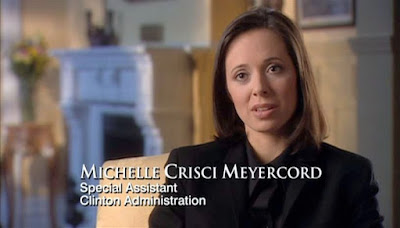
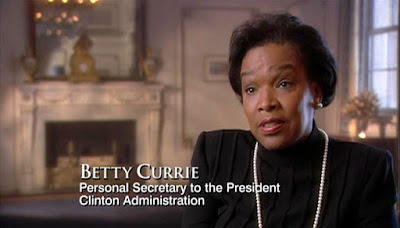
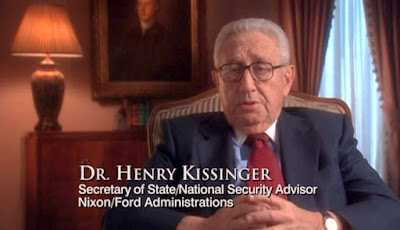
And since it's The West Wing, this isn't your typical clip show. Instead of a framing concept with the cast talking about past events in the show, William Couturie (winner of an Oscar for his 1989 AIDS quilt documentary Common Threads: Stories From The Quilt) brought in former members of real White House staffs and interviewed them about their experiences in the actual West Wing. We get recollections from lower-level staff folks like President Clinton's own "Mrs. Landingham" Betty Currie, or Kris Engskov (who talks about giving President Clinton his wake-up call, just as we see Charlie doing for President Bartlet), or Michelle Crisci Meyercord (who remembers wanting to frame her first paycheck from working in the White House, but needed to cash it to pay her bills). We also get to hear from higher-up administration officials like former Ronald Reagan and George H. W. Bush press secretary Marlin Fitzwater and Reagan's famed speechwriter Peggy Noonan. But the crowning achievement of this special is the coup of getting not only former Secretary of State Henry Kissinger, but also three former Presidents to take part (Gerald Ford, Jimmy Carter, and Bill Clinton). Not many television series about politics and the White House would have enough respect from actual political figures to get contributions from people like this. Every administration since Nixon was represented, usually by multiple figures - while President George H.W. Bush was invited to participate, he declined (Fitzwater worked under his administration) and senior adviser Karl Rove represented the current administration of President George W. Bush.

To be honest, it's not really a true West Wing episode, but since it aired in the appropriate timeslot and counted as one of NBC's contracted episodes, here we are. It's a neat little curiosity, at least, and it does serve its purpose to connect the lives of the characters we see in this fictional political world with the decisions and emotions and personal motivations of actual, real-world White House figures. It also allows Dee Dee Myers and Gene Sperling to kind of "double dip" in a way - not only were they former White House staff members interviewed for this special, but they also earned writing credits on scripts for The West Wing.

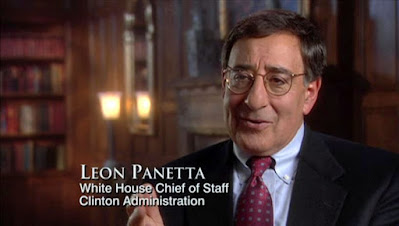
Here are all the people who were shown as interview subjects for this documentary, in order of their appearance on screen:


Story threads, callbacks, and familiar faces (Hey, it's that guy!)
  • The entire special is callbacks to previously aired episodes. I'm not going to identify them all.
  • BUT, hey, look there! It's Mandy! You know, the PR operative that disappeared near the end of What Kind Of Day Has It Been and was never seen or even referred to again? This is her in the background of a clip from The Crackpots And These Women. She also appears briefly in the Oval Office in the final clip of this special ... so her "last appearance" on the show is no longer the last episode of Season 1, I guess. Although she's still never mentioned again ...


End credits freeze frame: The final shot of Pilot, and one of the best shots of the entire series, looking down at President Bartlet at his desk from high above the Oval Office.


Saturday, May 9, 2020

Stirred - TWW S3E18


Original airdate: April 3, 2002

Teleplay by: Aaron Sorkin (61) & Eli Attie (3)
Story by: Dee Dee Myers (4)

Directed by: Jeremy Kagan (2)

Synopsis
  • The staff mulls over the electoral math that could mean dropping Vice President Hoynes off the ticket. A truck accident involving nuclear waste in Idaho keeps the White House on edge. Donna pushes for a proclamation honoring her high school English teacher, and Charlie gets an unpleasant surprise after President Bartlet prepares his taxes.


"Because I could die."


I was all prepared to go after whomever chose the title for this episode, a word taken from President Bartlet's complaint about James Bond and his demands for proper martini-making:
"Can I tell you what's messed up about James Bond? ... shaken not stirred will get you cold water with a dash of gin and dry vermouth. The reason you stir it with a special spoon is so not to chip the ice. James is ordering a weak martini and being snooty about it."
My take, at first, was that we're seeing everything get shaken up in this episode, from the Presidential ticket to preparing for transportation disasters involving nuclear waste to the rules about Presidential proclamations. It should have been called Shaken, not Stirred! I even got well into writing this entry from that angle ...

But then I thought about it a little more, and now I believe the title is precisely right. Bartlet disdains the harsh shaking of a martini, because he believes a gentler touch - stirring, not chipping the ice - brings about a better result. He doesn't go along with the idea of throwing Hoynes off the ticket and finding a replacement; he doesn't break tradition to honor a favorite teacher of Donna's with a proclamation, but his more personal, one-on-one alternative means a lot more; he doesn't go off half-cocked with a response to possible terrorism, but waits until he gets all the facts. The President is indeed "stirring" the events of the day to reach a satisfactory conclusion, instead of "shaking" everything up.

The primary story we're presented with is whether Bartlet might be smart to consider a replacement for Hoynes as the Vice Presidential candidate. Bruno (running the campaign, remember, as we saw in Manchester) has done the electoral math, and he's determined that not only will Bartlet lose Florida to the Republican candidate Rob Ritchie (since Ritchie is, well, governor of Florida), he's going to lose Texas, too. And since Hoynes' main usefulness on the ticket was to help bring votes in the South, including his home state of Texas, thoughts turn to potential candidates who might help win enough of the rest of the country to make up for Florida and Texas.

(It's interesting to remember that in "Post Hoc, Ergo Propter Hoc" we learned that the Bartlet/Hoynes ticket didn't win Texas in 1998, either. That doesn't negate the premise of this episode, as perhaps they did well in Florida which is now off the table for them, but Hoynes never brought them Texas.)

So with attention turned to the Northeast and the West Coast, the primary focus of interest is Admiral Fitzwallace, Chairman of the Joint Chiefs of Staff. As a decorated Vietnam veteran who's strong on defense, he'd counter some of the criticisms President Bartlet endures about his lack of military experience. And since he's an African-American, Josh and the other staffers are excited about his name on the ticket generating turnout and votes across the South. Problem is, nobody knows if he's even a Democrat.

So Leo's name gets thrown in the hat, much to Leo's scoffing disdain. The staffers realize one of the electoral problems they'll face with Leo is his past alcohol and drug abuse - but as we saw at the start of the episode (and have known since Five Votes Down), Hoynes, too, is a recovering alcoholic, and sponsors an AA meeting that Leo himself attends. That fact is unknown to anyone outside that meeting, but Leo practically spills it in the Roosevelt Room:
CJ: "You know, if it weren't for the drinking and the Valium ... and yet, Grant ..."
Toby: "That's right."
CJ: "And yet Grant. They went to Lincoln. They said, 'Grant's a drunk.' He said, 'Send all my generals a case of whatever he's drinking.'"
Larry: "I see a 30-second spot."
Leo (scoffing): "You guys don't think an alcoholic can be Vice President? You really think the 20th century didn't see an alcoholic in the West Wing? I'll be around."
The discussion spurs Leo to bring Hoynes to the Oval Office, so he can personally let the President know that he's a recovering alcoholic who is attending AA meetings. Bartlet needs to know all the facts when making this huge decision, Leo thinks - and Hoynes is gobsmacked that Leo hasn't let the President in on this fact already:
Hoynes: "Are you telling me he doesn't know?"
Leo: "How would he know?"
Hoynes: "You didn't tell him?"
Leo: "Of course I didn't tell him."
Hoynes: "Before you picked me, you didn't tell him?"
Leo: "No."
(It's unclear to me in Five Votes Down whether or not Leo actually knew Hoynes was a recovering alcoholic before the VP invited him to his AA meetings in the basement of the OEOB, which was almost a year after the Bartlet/Hoynes ticket won election. Perhaps Leo did know. Leo's alcoholism was basically an open secret in Washington - it was his drug abuse and stint in rehab first disclosed in The Short List that almost nobody knew about - so while Hoynes' past drinking excesses were definitely a secret to most, maybe Leo had that knowledge in advance, I dunno  ... in any event, it's clear Leo takes the promise to hold those AA meetings secret between the participants very seriously, and Hoynes is surprised by that.)

The discussion between Hoynes and Leo and the President is one of the highlights of the entire series. It's obvious Bartlet doesn't think this is a huge deal, not surprising when you consider his devotion to and trust in Leo, another recovering addict - but it's even clearer when Bartlet asks about the details of Hoynes' recovery:
Hoynes: "My last drink ... it was the year I was 22."
President: "Did you say 22?"
Hoynes: "Yes, sir."
President: "You haven't had a drink since you were 22?"
Hoynes: "That's right."
President: "I didn't start drinking until I was 25." 
And then Hoynes answers the President's question about what's going on in the Roosevelt Room - because even though the discussions are being held in secret (not even the President knows!), he's known all along:
Hoynes: "It's a meeting about having me replaced on the ticket. (turns to Leo) I know how to count to 270."
And Bartlet shows his level of commitment and duty and loyalty, as he scribbles something on a piece of paper:
President: "John, despite this recent revelation that you drank beer in college I've always liked you a little more than you thought I did, but that's not why you're staying. It's this."

"Four words."


Part of the genius of the Aaron Sorkin style is that we don't find out what those four words are yet - we see the President write them, we watch Hoynes and Leo read them, but we're left in the dark for now. Only later, when Leo is showing the note to Josh, do we discover what the President wrote: "Because I could die." Bartlet recognizes the precariousness of his health, with his MS diagnosis and possible physical and mental deterioration within the next four years looming over him, and Hoynes is the man he trusts to carry on if Bartlet is no longer there.

There's also the part of the story concerning Republicans in Congress ready to kill an education funding bill if Hoynes' name stays on a provision for technology/internet advances for schools and students. I think that plotline serves two purposes - it's a bit of a contrast from what we saw in Five Votes Down, where Hoynes rather ingeniously pulled some strings and made some things happen to steal credit away from the White House for a key bill, and also shows how Hoynes' commitment to doing the right thing (funding these programs to help kids learn and get internet access to more schools) is more important than electoral politics. And it's really that second point, Hoynes' integrity and willingness to sacrifice personal gain for a better national goal, that seals the deal with President Bartlet.

The nuclear waste accident storyline is leaned on pretty heavily, as the administration frets about a possible act of terror (logical to think, for an audience watching in a post-9/11 world, although Bartlet's response to Leo's news about the driver of the stolen truck being identified - "Arab?" - is a bit jarring. Surely the President doesn't think an act of terrorism could never be carried out by a white Christian? Hell, it happened to him in What Kind Of Day Has It Been, for crying out loud), but in the end, it turns out it was simply an accident. It does prompt the President to mull over all the unknowables about handling nuclear materials, how a government can prepare and test and fortify for all the events they can possibly conceive, but they can never prepare for the inevitable ones they can't think of.

Another throwaway is the Bill Fisher story, the HUD Secretary whose planned announcement about home ownership loans rings an alarm in Toby's head. Toby quickly realizes Fisher is using this program as a way to build in-state political capital for an eventual run for New Jersey's governorship. Toby calls him in and reads him the riot act about not being a team player and how he doesn't use a national stage to announce regional programs. It's nice to see Ginger working hard to do Toby's bidding and bring in a Cabinet secretary who really is trying to avoid the meeting, but there's not much to this plotline.

Then there's Charlie's battle with his taxes. He's looking forward to a $700 refund, which he's planning to spend on a new DVD player and a copy of On Her Majesty's Secret Service (probably just Sorkin's excuse to squeeze in Bartlet's James Bond references. I think it's interesting that the only George Lazenby entry in the Bond film series is Charlie's favorite). It's pretty funny to see the President of the United States sitting in front of a computer, happy as a nerdy economist can be, entering Charlie's tax return information:
President: "I love doing this."
Charlie: "Really?"
President: "Yeah."
Charlie: "Filing tax returns?"
President: "Yeah."
Charlie: "Okay."
President: "What?"
Charlie: "I was just thinking about the plurality of Americans who made the decision to pull a lever that had your name next to it." 
President: "Suckers."


As it turns out, Charlie isn't getting $700 back, he owes $400, thanks to his liability for a government tax "rebate" check that taxpayers received in 2001. Not only does this lead to some pretty funny scenes of both the President and Leo asking Charlie for his owed taxes:


"And you don't even need a stamp. Hand it over."


But it also brings us a rather cogent argument from Charlie that this was no "rebate":
Leo: "Your rebate came off of this year's taxes. That's how we paid for it."
Charlie: "Hang on. The money I got back last year has to be paid for?"
Leo: "Yeah."
Charlie: "That's not a rebate. That's an advance."
Leo: "Well, technically, I guess -"
Charlie: "Not technically. This is like getting a Christmas bonus and having it deducted from your January paycheck." 
Charlie, being the good American citizen that he is, gives up his DVD player and Bond movie to pay his taxes - but as we've seen many times, President Bartlet looks after Charlie as the son he's never had. Bartlet purchases the DVD player and movie (and a Gilbert & Sullivan opera, just because) and has them sent to Charlie's house. Just like a dad.
Charlie: "That was an incredibly nice gesture."
President: "I'm really something."
Speaking of incredibly nice gestures, a favorite teacher of Donna's from her high school days in Madison is retiring, and she really, really, really wants a Presidential proclamation of a day in her honor. She pesters Josh non-stop - she's done her research, she knows it's possible that in a world with National Digestive Diseases Awareness Week and National Sewing Month and General Pulaski Memorial Day the President should be able to do something for a teacher who's gone above and beyond to help students learn for 41 years. Josh keeps putting her off:
Josh: "She's not less worthy. But neither is she more worthy than the other 90,000 public school teachers who are retiring this year."
Donna: "Who weren't lucky enough to have a White House staffer as a former student."
Josh: "But that's where we get into trouble."
Donna: "Who would find out?"
Josh: "'Who would find out?' is also where we frequently find trouble." 
But behind the scenes, Josh does write up something to send to the President. And Bartlet has something up his sleeve for Donna, as well as for Mrs. Morello. He calls Donna to the Oval Office, as he's slyly had Charlie get Mrs. Morello on the telephone. He gives Donna the chance to make a sort of proclamation of her own:
Donna (talking into speakerphone): "Well, I ... I just wanted to say, I don't know, I just ... I just wanted to say ... I don't know ..."
Mrs. Morello (on speakerphone): "Are ... are you sure everything's all right?"
President (whispering): "Tell her where you are."
Donna: "Mrs. Morello, I'm in the Oval Office with the President of the United States and it's because of you." 
And then, to make things even better, the President himself joins in, poking fun at Mrs. Morello's choice of educational materials and having a personal, friendly discussion with Donna's favorite teacher. And you can see how much this means to Donna:


The President really does have a deft touch, stirring carefully to navigate through so many aspects of his job. The way he brushes off the potential PR and electoral pitfalls of keeping Hoynes on the ticket, or the trust and devotion he shows to Leo despite his past falls from grace, is foremost in this episode. But the deep respect and affection he has for his staff, for Charlie and for Donna, is also evident. He's avoiding the snooty "weak martini" of just shaking things up to hope for some kind of change, and instead gently stirring to produce an elegant, pleasing and very satisfactory result.


Tales Of Interest!

- It almost seems like The West Wing trademark shot of the camera moving in a circle around the characters is now a contractual requirement that must be included in each episode. We get two of those spinning shots pretty early in this one ... the scene between Josh and Donna in her office, and then with the President and Charlie as Bartlet works on his taxes. Here's part of that first scene:


- A cool element of foreshadowing, one so subtle I didn't even notice it until about the third time through: as Jed is helping Charlie with his taxes, we can see a television behind them that's airing a news report. The story is about something in Idaho - note the graphic showing the outline of the state. This is before CJ comes to tell the President about the truck accident with the nuclear materials in Idaho. The show runners went to the effort of filming that little news report snippet, about coverage of a major news event that not only we the viewers didn't know about, but not even the President had knowledge of yet - and they called no attention to it, just slipped it into the background. I love little details like that.


- We learn Charlie's Adjusted Gross Income for 2001 is $35,000. Since he'd likely be at Step 2 of the GS pay scale for federal employees (being hired in late 1999, and receiving one step increase at the beginning of 2001), that puts him about at the GS-9 level (with the locality adjustment for Washington, DC, a GS-9 Step 2 in 2001 would have a base salary of $37,877). His income of $35,000 in 2001 would be equivalent to just over $51,000 in 2020 dollars (although a GS-9 step 2 in Washington DC would have a 2020 base salary of just over $61,000).

- Charlie's issue with the tax rebate affecting his refund was based on a rebate actually enacted under President George W. Bush in 2001. Tax rebate checks (approximately $300 per person) were sent out to taxpayers in the summer and fall of 2001. They were designed to get the benefits of a tax rate cut that took effect earlier that year into the hands of Americans right away; therefore, they were an "advance" of sorts - instead of a bigger tax savings on their spring 2002 returns, they got a portion of that money sent to them directly during 2001. So Charlie is essentially right, although how he could go from an estimated refund of $700 to owing $400 in taxes over a $300 rebate makes absolutely no mathematical sense ...

- We actually see Ed without Larry! At least for a short time, until Larry comes into the room. Their standing as very highly trusted aides is confirmed as well, since they're included in the top-secret non-leaking group talking about replacing Hoynes.


- I think Sorkin miswrote a line of Toby's. As they discuss how to make the electoral math work without Hoynes, Toby says they need to sweep "the northeast, the Pacific coast, and the industrial Northwest." I don't think "industrial Northwest" is really a thing, plus that'd mainly be included with the Pacific coast ... he must have meant "industrial Midwest," because that would make far more sense in this discussion.

- In the last episode we saw how Sam's line "I'm looking for a mind at work" was used in Lin-Manuel Miranda's Hamilton musical. Josh mentions Vice President Aaron Burr and the fact that he shot a guy (a guy named Alexander Hamilton), which ties in to the entire plot of Hamilton.

- I think we catch Sam in a little bit of a fib. In the meeting with Hoynes, without prompting he flat out says to the Vice President, "They want your name off the bill." When he's back in the White House and finds out about the discussion to remove Hoynes from the ticket, he angrily defends Hoynes to Josh, saying, "I didn't have to convince him, or even suggest it." Well, he did bring it up, although not technically suggesting it.

- President Bartlet - who's basing his entire reelection campaign on being smart, remember - chastises Mrs. Morello about teaching Beowulf in a translation instead of the "original Middle English." Problem is, Beowulf was written in Old English, not Middle English.

- Can we talk a little bit about the good-natured, happy, almost giddy tone we've seen out of President Bartlet over the past few episodes? When you go back to War Crimes or The Two Bartlets or Night Five or Hartsfield's Landing, he's been pretty cranky - mainly because of Toby, but just cranky in general. Since that turning point when Toby told him to "make it (the campaign) about smart, and not" and the President took that to heart, he's been in a terrific mood. We can see that making the decision to "be himself" and embrace his wonkiness and intelligence in the campaign, it's lightened his mood considerably. Even with serious events like the truck accident in Idaho, focus on those heavy issues don't seem to hold him back. Just look at how he's teasing Leo about not being able to be reached and grabbing his pager:


What a cutup! I like this side of Jed Bartlet. Even in the midst of potential radioactive disaster, he's ready with a clever quip:
Leo: "FEMA's indicated they're going to want to make it the Governor's call, and the Governor's indicated he's going to want you to step in and -"
President: "I should set a ransom. I'll tell you what the radiation levels are, but first I want your electoral votes. Or is that a bad strategy?"
Leo: "Pretty bad."
President: "Okay, no ransom. We'll play this one straight." 
- Tim Matheson earned an Emmy award nomination for Outstanding Guest Actor in a Drama Series for this episode. The Emmy ended up going to Charles S. Dutton for The Practice.


Quotes    
Sam: "What do you think he's going to say when you tell him?"
Josh: "I think he's gonna say, 'Josh, you look remarkably like Sam Seaborn.'"
-----
Sam: "Got a minute?"
Toby: "If I said no, would it stop you?"
Sam: "No." 
-----
Charlie: "Seven hundred dollars?"
President: "Four hundred." 
Charlie: "I'm only getting $400 back?"
President: "You owe $400."
Charlie: "They're saying I owe the federal government money?"
President: "And you don't even need a stamp. Hand it over."
Charlie: "There must be a mistake."
President: "Whatever. Hand it over." 
-----
Josh: "You say what you want, Hoynes is a pragmatist. To do this, he'd be the craziest Vice President since Aaron Burr. And Burr shot a guy."
-----
Larry: "No one knew if Eisenhower was a Democrat or Republican before he ran."
Ed: "Grant only voted once in his life, and it was for the other guys."
CJ: "Grant works as an example in almost any situation. That's his legacy."
Toby: "Plus he won the Civil War."
-----
President: "Yup. It was the rebate."
Charlie: "It wasn't a rebate. It was an advance."
President: "You say potato ..."
Charlie: "I do say potato, and so does everybody else I know."


Story threads, callbacks, and familiar faces (Hey, it's that guy!)
  • Leo was first invited to the Vice President's AA meeting in Five Votes Down. We only saw him entering the room for the "card game" in that episode - now we are taken inside the meeting itself.
  • Josh recalls his work for the Vice President prior to joining the Bartlet campaign, something we first became aware of in What Kind Of Day Has It Been and In The Shadow Of Two Gunmen, Part I.
  • Charlie's plan to use his tax refund to buy a DVD player dovetails with Donna's plan to use her share of the federal budget surplus to buy a DVD player in Mr. Willis Of Ohio. Interestingly enough, Charlie's expected refund of $700 is also the exact same amount as Josh throws out as an example of Donna's individual share of the surplus in 1999.
  • Charlie says to President Bartlet "I'm thinking about the plurality of Americans who made the decision to pull a lever that had your name next to it." We discovered in Let Bartlet Be Bartlet that the President was elected in 1998 with 48 percent of the popular vote - a plurality, not a majority - as there was apparently more than one other major candidate splitting the vote.
  • Doug Wegland, whom we last saw in Ways And Means, is still involved with Bruno's campaign team as Josh mentions him in the discussion about removing Hoynes from the ticket.
  • Toby saying "If the President wins reelection it will be on the Vice President's coattails" and having that leaked to the press (which led to him telling his staff "you're my guys") comes from the episode War Crimes. Toby says it was "five months ago," which would be November (since this is April, with Bartlet doing Charlie's taxes) and War Crimes did indeed air in early November. 
  • We still don't get to see John Amos as Admiral Fitzwallace on screen (although his reappearance is coming), but we do get to see a photograph of him as the staffers talk about possible replacements for Hoynes on the ticket. We last saw Fitzwallace in-person in What Kind Of Day Has It Been.

  • The notion of Leo as a Vice Presidential candidate will come up again, a few years down the road.
  • It's an interesting contrast between Hoynes' willingness to take his name off the education bill and his crafty maneuvering to steal credit away from the President over the gun control bill in Five Votes Down. Of course, putting things together from what we learned in Season 2 and in Manchester, back in 1999 Hoynes believed Bartlet would step aside after only one term, giving Hoynes the opportunity to run for President in 2002 and thereby using that inside knowledge as leverage to force passage of the gun control bill. Now he's willing to lose any credit for his technology section of the education bill, just to get the bill passed and help
    American students without any outright political benefit. Playing another level of sixth-dimensional chess, though, in Five Votes Down Aaron Sorkin hadn't yet conceived the long-term arc of Bartlet's MS and his one-term promise ... Hoynes' plan to run in 2002 only makes sense in retrospect of the events of Season 2 and actually wouldn't have applied when Sorkin wrote Five Votes Down. Does all that make your brain hurt yet? 
  • Hoynes' disbelief that the President doesn't know about his alcoholism and AA meetings doesn't fit with the fact that President Bartlet asked him, "Listen, you feel like having a beer with me?" during their tense Oval Office meeting in War Crimes. 
  • The relationship between the President and Vice President that we see here is considerably different from what has been developed over the past 2 1/2 years. All the way back in "Post Hoc, Ergo Propter Hoc" we saw tension between the two; more examples arose in Five Votes Down and Enemies ("You shouldn't have made me beg, John"), The Stackhouse Filibuster and Manchester, and then the simmering hostility between the two we saw in War Crimes. Now, they're on almost friendly terms - a lot of that is Bartlet's new, happier point of view, but we also can see Hoynes is fully onboard with the 2002 campaign, knowing its success can only help his chances in 2006.


DC location shots    
  • None. There's nothing outside of the White House in this episode.

They Do Exist! It's The Real Person, or Thing    
  • Charlie is a fan of fictional British spy James Bond, or at least of the Bond film On Her Majesty's Secret Service (which he found on eBay). Bartlet also refers to The Yeoman Of The Guard, which is a Gilbert & Sullivan opera (we've seen Sorkin's appreciation of Gilbert & Sullivan multiple times before). When the President later says he's giving Charlie The Yeoman Of The Guard on CD (not DVD), that may be accurate if he means a musical recording of the opera (although the opera was produced as a TV movie in 1982).
  • The aircraft carrier Truman is indeed a nuclear-powered ship.
  • Jed jokingly invokes the fictional secret agent Mr. Moto when he harrasses Leo about his pager. Moto was a character in novels written by John P. Marquand between 1935 and 1957, and was portrayed by Peter Lorre in eight movies in the 1930s.
  • The Revolutionary War general Pulaski and the proclamation of a day in his honor is brought up several times.
  • President Bartlet refers to the Lone Ranger's partner Tonto in this passage with Charlie:
President: "Charlie, I've been tapping my finger on the desk for about a minute now."
Charlie: "Sir?"
President: "The magic man thing works a lot better when you pick up on the signals, Tonto. What's that you say? There's a phone call for Donna?"
  • Products seen and mentioned: there's a quick glimpse of Sun Maid Raisins in Donna's office; 

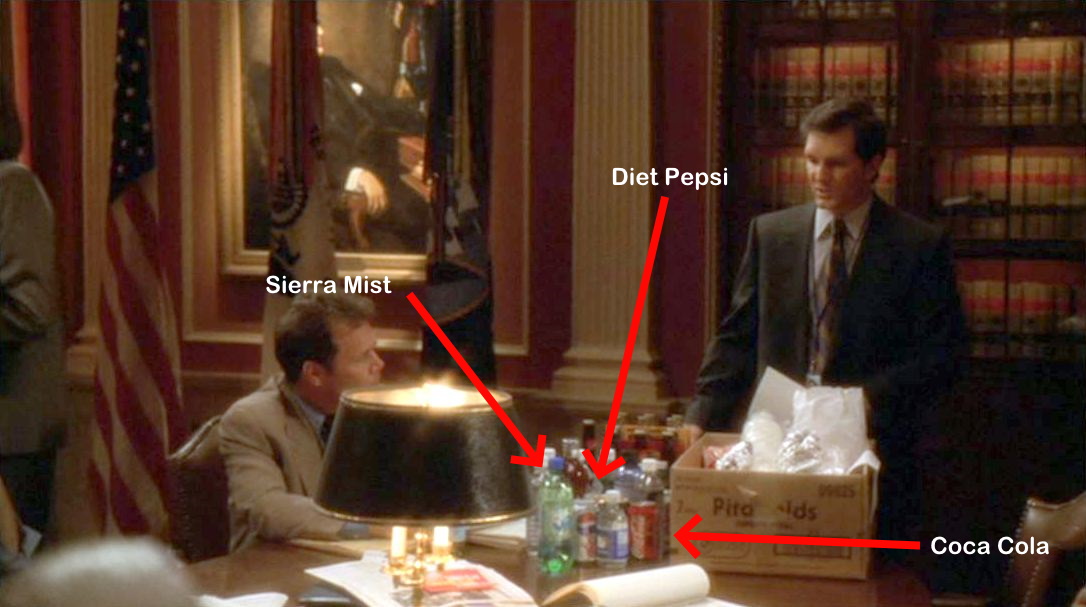
We can see a bottle of Sierra Mist plus cans of Diet Pepsi and Coca-Cola on the table during the Roosevelt Room meeting:

Ed has a can of Canada Dry ginger ale:

If you've been reading my blog over the past few months, you know I've mentioned how Keeper Springs brand water seemed to be the "official" bottled water of Season 2, because those bottles were everywhere. Things must have changed here in Season 3, as this time it's Deer Park brand bottled water (while the actors try mightily to keep the label covered up, I got a good look here):

Josh calls out the corporate-supported Hoynes as "the Tostitos Vice President"; President Bartlet asks Charlie if a trip to Banana Republic to spend his rebate check would have killed him; Bartlet refers to the scope of the upcoming campaign as an Etch-A-Sketch that's yet to be shaken up. 
End credits freeze frame: Donna and the President talking on the phone with Mrs. Morello.